On a regular Saturday morning, Blackwell Hall does not usually smell like grilled pork belly and Filipino sisig. The Blackwell building turned into a maze full of food and flags, with traditional costumes and students inviting peers and guests to try dishes from the countries they were representing. In just a few steps, you could “travel” to Taiwan, to the Philippines, to the United States with zero plane ticket or visa required.
Running a culture room is a lot more than putting out a flag and some snacks; for many students, it is an opportunity to share about their family history, identity, and pride in where they come from. Students at EF Academy Pasadena used the Culture Fair to turn food, costumes, decorations, and traditions into a way of saying “This is who I am.” From Bella Bermudez’s early Christmas story, to Filippo Hwang’s Taiwan, and Jack Tracey’s version of America. A few rooms show how culture becomes real through specific tastes, memories, and moments of courage to share with everyone who was participating in the fair.
The Philippines room was filled with bamboo sticks for decoration, and a cozy atmosphere that could ease your stress in a second. There was Bermudez, who was representing this room. She explained that the Philippine’s culture was a harmonious mixture of Hispanic, Middle Eastern, and Chinese influences, but the heart is always about family and community. She spoke Tagalog (a local Philippine language) before moving to America from Manila city when she was 10-years-old.
Despite that, she still lights up when she sees her culture get represented, “Whenever I see myself represented… I always see the kindness… and the very, like, friendliness and that’s something that I really value… that’s something I want to be like as a person.”
Bermudez talked about how seriously people in the Philippines take tradition. Christmas, for example, doesn’t just last a month–it basically lasts five. “We start Christmas five months early, the music and decorations show up as early as September,” she laughed. Bermudez also demonstrated the Tiniking dance, where dancers have to dodge bamboo sticks to form a specific movement, and she loves the dance because she believes that this dance can bring people together and ease conflict. Even the food on her table carried history. Her favorite dish, sisig, started as a “survival food” made by mixing leftover parts of a pig, like pork face, with onions, seasonings, and chili, then serving it over rice. What used to be a way to get by during wartime is now her favorite comfort food.
Next up was the Taiwanese room, which was vibrant, well-decorated, and full of wonderful smells from the foods they were cooking. Hwang, one of the students representing Taiwan, described Taiwanese culture as “very diverse,” noting how it’s made up of multiple different groups of people with Chinese culture mixed with Native traditions from the Indigenous groups on the island. He further elaborated on the diversity by explaining how Taiwanese is actually a dialect shaped by multiple languages, including Japanese.
Hwang explained, “We speak Taiwanese…There was a time that we were occupied by Japan… Some of our words are actually from Japanese.”
A fun fact Hwang shared was that “Taiwanese people also invented ramen.” While most people may associate ramen strictly with Japan, the creator of instant ramen, Momofuku Ando, was born in Taiwan in 1910. Another food he brought up was a traditional dish called “stinky tofu.” He said despite the name and smell, it’s actually really good and recommends people to try it if they get the chance. However, the main foods that were actually present in the room were the Taiwanese pork belly rice and brown sugar boba milk tea. Students thought both were delicious and this helped contribute to the popularity of the room as a whole. Overall, the Taiwan room was an outstanding display of Taiwanese culture and was a very interesting visit.
Located on the top floor of Blackwell Hall was the booth representing the United States at EF Academy’s annual Culture Fair. Represented by Grade 11 student Jack Tracey, he brought the American spirit to his booth with the vibrant decorations of the room.
The room was themed in the colors of the American flag, and the flags of all U.S. states and territories were displayed along with the flags of many famous American football teams. There were many delicious foods and snacks at the booth as well, including buffalo wings, barbecue, chocolate chip cookies, and root beer floats: all staples of American cuisine.
When asked about his favorite part of his culture, Tracey stated, “America isn’t an ethnicity. America is a group of people from all kinds of ethnicities that all come together and create culture, and that’s what I love about it.”
Upon viewing the USA room, this couldn’t have been more evident. Rather than feeling exclusive, Tracey clearly created a welcoming and interactive space meant for everyone to enjoy, with all the activities offered there; this includes a game called Cornhole, ring toss, and picture opportunities with a cardboard statue of Sabrina Carpenter.
The room also represented many aspects of American culture, highlighting the USA by representing the cultures of many different regions of the country while still maintaining unity. Tracey elaborated on this, adding, “American culture is such a broad expression. We have so many different cultural regions… but really, we’re all united by a sense of patriotism.”
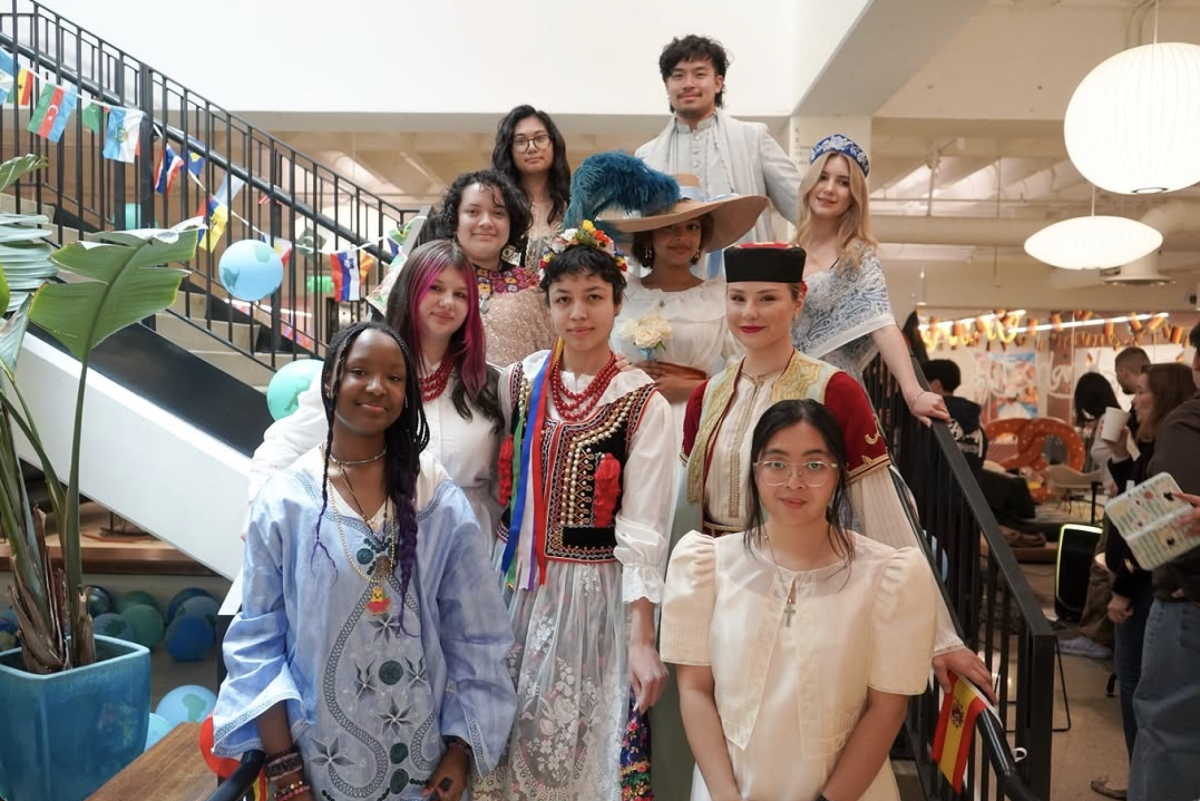
There were also many other events to make the fair more fun, like the fashion show. Countries such as Zambia, France, Poland, and the Philippines were among those featured, alongside many others. Each outfit carried meaning, whether through detailed embroidery, symbolic colors, or carefully crafted designs passed down through generations.
One of the participants, Rai Woodard, represented Poland at this year’s Culture Fair, sharing both the beauty and resilience of their country’s heritage. “The one that I’m specifically wearing is a traditional costume from Krakow, because my mama said our family is from Krakow.”
They wore a traditional garment called “Krakow” or “strój krakowski,” an iconic Polish folk attire featuring vibrant, ornate designs. Krakow is known for their bright colors, detailed embroidery, and decorative elements that reflect Polish cultural pride.
Woodard also shared a bit of historical context about Poland. In the late 18th century, the country was divided and taken over by neighboring powers. “Poland was removed from the map for 123 years, countries ganging up on Poland and trying to erase our history.” Poland regained independence in 1918.
During that time, traditions such as folk clothing helped preserve Polish identity and culture. “We wear bright colors and a lot of embroidery and beads to represent our social status and our cultural pride,” they said.
“Because it took a while to get all the embroidery together, this would be one for special occasions,” Woodard explained. Today, the costumes are commonly seen at festivals, folk celebrations, and cultural events like this one.
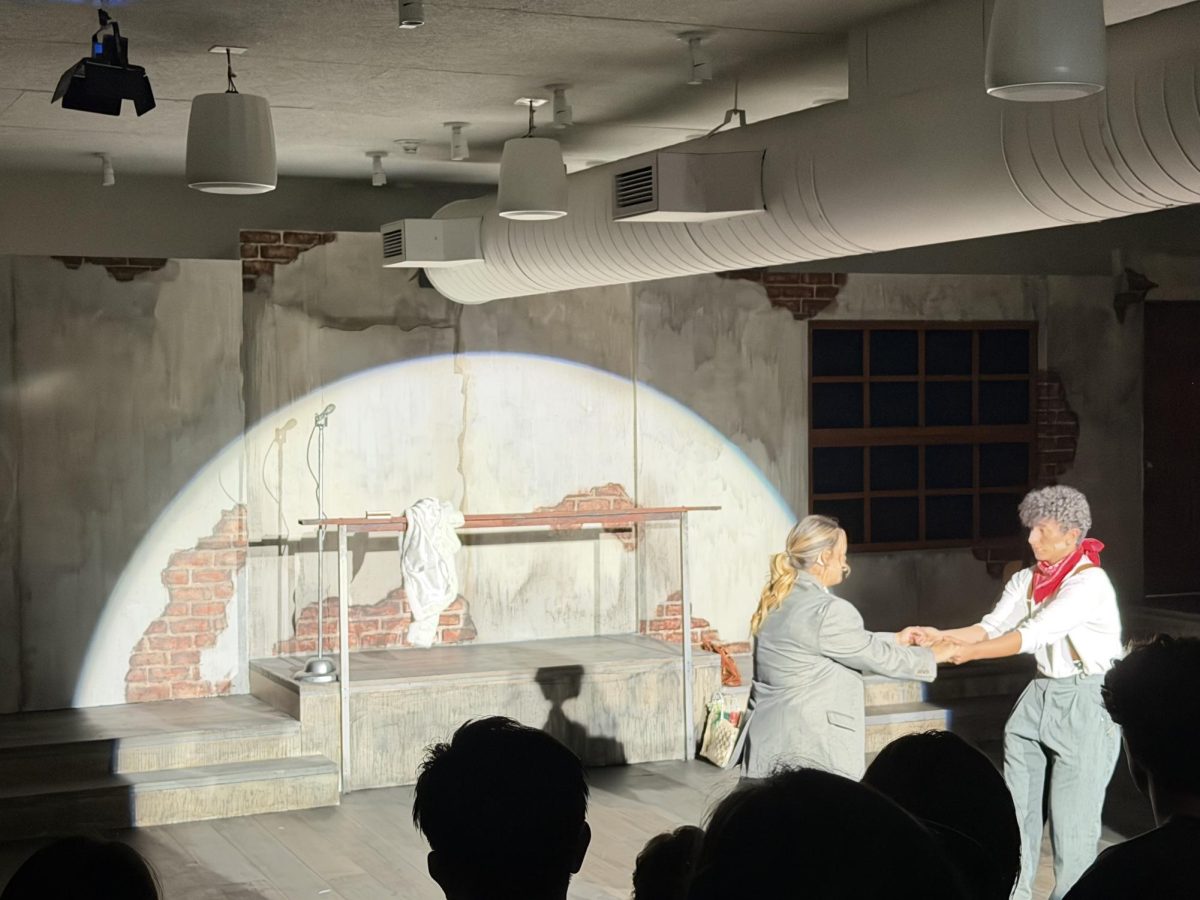
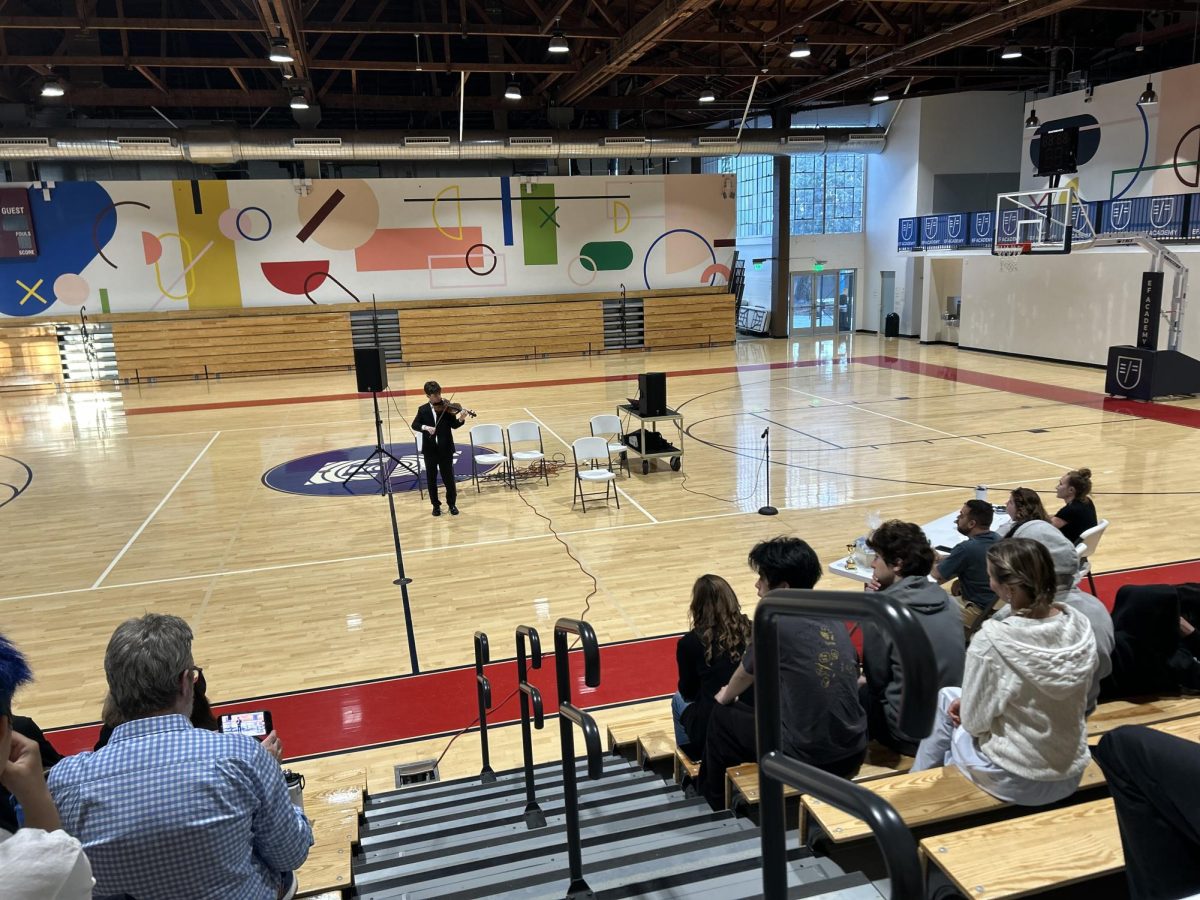
Another elements to make Culture Fair more complete and fun was a series of performances that brought different countries and traditions to life on the stage. Ambre N Guetta beautifully represented France by singing “La Vie en Rose” by Edith Piaf. Her expressive voice captured the romance and emotion of the classic French song, filling the area with warmth and nostalgia. N Guetta successfully gave the audience a glimpse into French culture with music.
Another performer is Benny Martinez, who proudly represented Guatemala by reading a passage from the “Popol Vuh”, the sacred text of the K’iche’ Maya people of Guatemala. He explained how the story describes the creation of humans and reflects important beliefs and identity, nature, and humanity’s connection to the earth. Through his storytelling, the audience gained insight into Guatemala’s rich Indigenous heritage and the resilience of its cultural traditions, which continue to thrive today.
Aside from many cool performances, the fair also included interactive activities, one of which is an old traditional Dutch game called “Spijkerpoepen” or “Nail pooping,” hosted by the activity specialist Kaitlyn Sulaiman. Spijkerpoepen is a game where you tie a string with a nail around your waist. The goal is to get the nail in the empty beer bottle behind you. It’s a very simple game and very accessible for students. The game gave students and families a good laugh and a chance to participate while learning about the culture of the Netherlands. It brought a playful energy to the event and encouraged everyone to get involved.
To conclude the performance, Serafima Arishina and her friends did a surprise performance. They took the spotlight and represented Serbia with a lively traditional dance. Their flowy dresses moved gracefully when they danced to the vibrant music and their positive energy captivated the audience.
No matter what the country is, though, they all return to the common themes of food, family, and representation. Despite coming from very different parts of the world, every student at the Culture Fair turned their room into a small painting that illustrated their home country to the fullest through recipes, dances, languages, and stories. The fair doesn’t just teach random facts about countries; it allows students to see themselves represented and feel proud of their identities that might not always be visible at school.
Culture Fair is not just another school event, it’s a celebration of multiculturalism.