

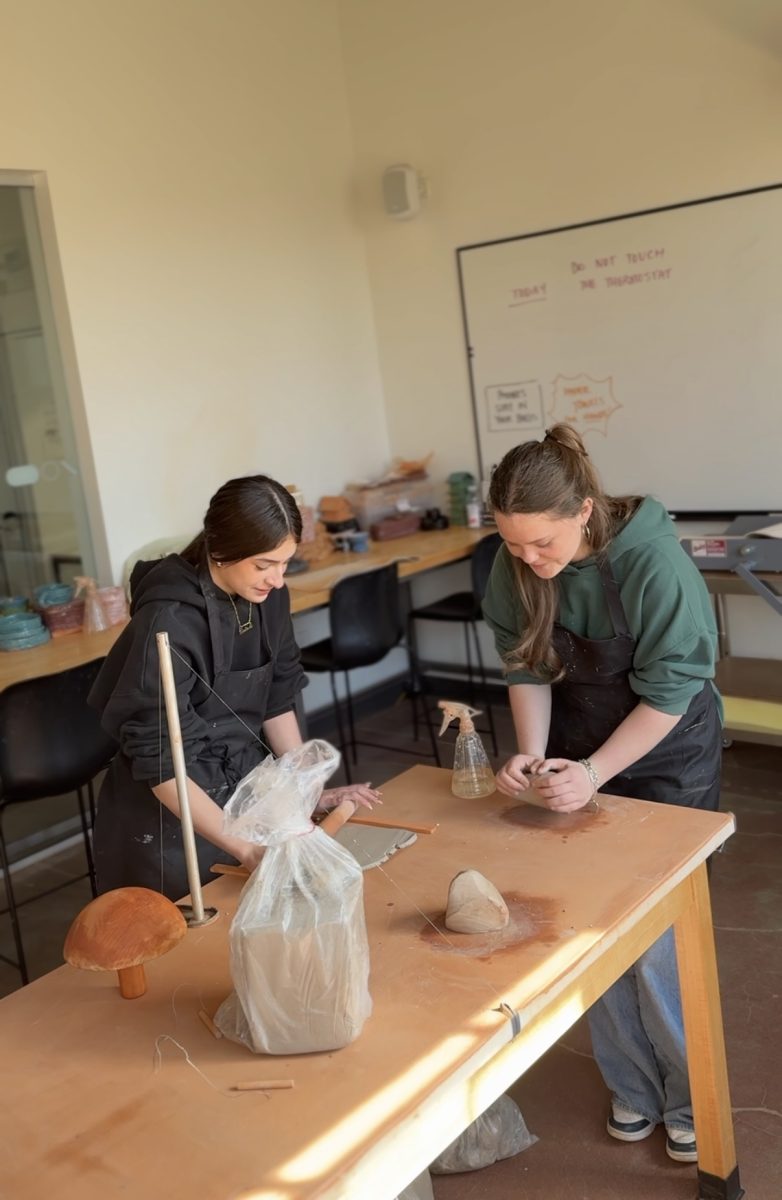
At EF Academy, a group of students in the Innovation and Impact class is transforming creativity into social action by creating handmade ceramic bowls and hosting a community dinner event to raise awareness about hunger and poverty while supporting the Empty Bowls charity.
At EF Academy, innovation is not limited to ideas; Instead, it puts innovation into action. One group in the Innovation and Impact class—including the members Bridget Spain, Gwyn Gable, Melina Mendoza, and Maria Umezawa—has taken on the challenge of addressing a global issue through a hands-on project that combines art, community engagement, and social awareness. By creating ceramic bowls and organizing an interactive dinner event, the group is working with a larger global context.
The group’s project revolves around both creation and experience. The group handcraft ceramic bowls, which will be used during a dinner event hosted for the community. At the end of the event, people who attended are invited to take a bowl home in exchange for a donation to the Empty charity. Rather than simply asking for donations and presenting the purpose, the project uses a different approach by creating a personal and interactive experience, which encourages deeper engagement with the causes.
Umezawa emphasized how they aim to “connect a simple meal with a deeper message about food insecurity.”
This project is aligned with Sustainable Development Goal #2: Zero Hunger. This goal aims to end hunger and improve food security worldwide. By raising awareness and increasing engagement, the group collects donations and contributes in a small but meaningful way in addressing this global issue in a larger context. How the group is working to connect their work to a larger framework also allows students to see how local actions can contribute to broader international efforts.
They came up with this idea for the project by being inspired by the Empty Bowls charity, which works for a global movement that uses art and shared meals to raise awareness about hunger. They adapted this concept into their own school setting, by adjusting and designing a project that fits their resources and community. By reinterpreting an initiative that already exists, these students were able to create a project that is both meaningful and achievable within their environment.
The group aims to create lasting participants, beyond fundraising. Mendoza believes that this project is effective since “it combines a physical experience with a meaningful cause.” The goal for the group is to highlight the gap of awareness and action, and aim to bridge this gap by actually involving people
Despite their clear goals, the process has not been easy and simple steps. One of the biggest challenges that they faced is producing a large number of handmade ceramic bowls in time for the event. Umezawa added that managing both the schedule and making sure that everything is prepared for the event is also challenging, since it requires a lot of effort in planning and teamwork.
As the projects move forward, they have already completed a significant amount of work, and most of the ceramic bowls are made. Now the team is focusing on the final steps and adjustment, such as coating bowls and planning the dinner event.
Although the project has not yet reached its final stage, it has already provided important lessons about teamwork, planning, and connecting ideas with action. With the strong teamwork in this group and the way they bring preparation, communication, and purpose together shows strong potential for the project and how small student-;ed actions can contribute to bigger impact and meaningful change.