





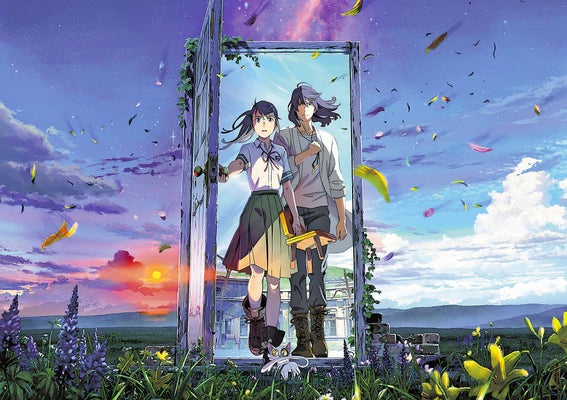
In 2022, director Makoto Shinkai released his new movie, “Suzume,” a fantasy-adventure film produced by Comic Wave Film. This movie is a road-movie format in which the main character, Suzume travels across Japan to close mysterious doors. However, as the story progressed, the plot was connected to the Great East Japan Earthquake, which occurred in 2011, and it becomes clear that “Suzume” is not just a fantasy story. It is a reflection on memory, loss, and the emotional meaning of place.
According to Shinkai, he described the story as “a story that mourns place.” This idea is central to the narrative. Throughout her journey, Suzume visits abandoned or forgotten places. The doors she closes are not simply magical threats. They symbolize unresolved memories and emotions connected to places people once lived or have been to. This film suggests that places themselves deserve to be remembered.
He also shared the significant influence of the Great East Japan Earthquake. Although the disaster is not directly drawn in a historical way, its emotional presence was obvious in the movie. Shinkai said that, “For ten years in my forties, I kept making films while thinking about 2011,” and that awareness is felt in “Suzume.”
What I found powerful in the movie is how the film approaches this natural disaster organically. Instead of being heavy or overwhelming, it presents disaster memories through fantasy, and is accessible to all generations, especially younger generations who don’t share these memories.
Structurally, the film was like an RPG-style road-movie. The main character, a high schooler named Suzume, traveled from place to place, and each encouraged her growth. She met many people who helped her on her journey. Suzume’s courage and selflessness stood out to me; She risks herself for others without hesitation. That made me reflect on how I responded to difficult situations in my life.
This was my second time watching a Shinkai film, after “Your Name” which was released in 2016. Compared to “Suzume” and earlier work, I found that “Suzume” is much easier to follow. The plot was simpler, which might reduce its rewatch value, but it also makes the theme clear. When I slowly realized how deeply the story was connected to the Great East Japan Earthquake, it was a striking moment for me. The film also carries a strong sense of “Japaneseness” through its landscapes and cultural context, which attracts all audiences.
Overall, Shinkai successfully combined fantasy and adventure. He shared that, “I kept thinking about the initial plot and carefully built the story over time.” His effort from the time when he was writing the script, which is in 2020 during COVID-19, to its release in 2022 made “Suzume” one of his huge hit films. It is not just a beautiful adventure story, but a thorough reminder that places hold memories, and that remembering them is part of moving forward.
Especially for younger generations who did not directly experience the Great East Japan Earthquake in 2011, this film can become an opportunity to understand the emotional impact of the disaster. Because it does not present the topic in a heavy way, but indeed through a fantasy story, it naturally conveys the importance of memory and place. For that reason, I believe this is a film that many people should watch.