

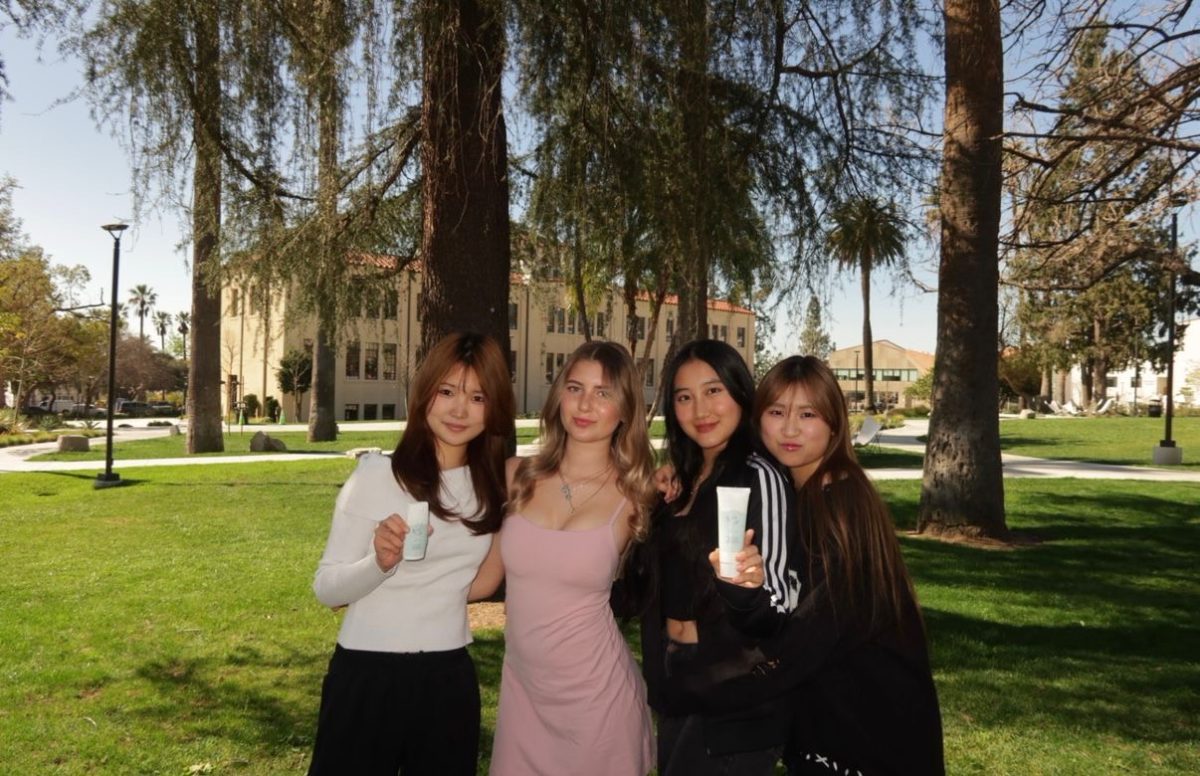

Serafima Arishina, a Russian high school student, experienced her first encounter with dead coral during her vacation in the Red Sea. Most traditional sunscreens contain harmful chemicals to marine ecosystems, and seeing the damage firsthand stuck with her. Arishina and three other students decided this problem needed attention and came together to create a sustainable, coral-safe sunscreen brand. A simple classroom project quickly turned into a mission they hoped could make real-world changes.
Their motivation began in 2023 when they were grouped together and quickly learned that they all had something in common; they all shared a deep love for the ocean. The founders, Arishina, Ariadne Duan, Aina Hirata, and Ai Hiruma, aimed to focus on the UN’s Sustainable Development Goal 14: Life Below Water, which focuses on protecting and restoring marine environments. Wanting to take real action against reef damage, they set out to create sunscreen that was not only effective but safe for the environment.

With the rising global concern about toxic sunscreen products harming marine ecosystems, they strived to learn everything they could about safer alternatives. Coral bleaching and reef destruction continue to threaten biodiversity and the communities that rely on these ecosystems. These students realized that many beaches and governments are trying to ban harmful sunscreens, reinforcing that safer options are urgently needed.
Arishina and Duan led the research behind their innovative product. They needed to find coral-safe ingredients and compare them to the harmful chemicals in everyday sunscreen.
“We learned that ingredients like oxybenzone, octinoxate, and homosalate are horrible for coral,” said Duan. They tested multiple formulas in a lab with a tank of water and a piece of Acropora coral inside. Throughout the year, they tested and observed how the coral would react to the chemicals in their prototype.
Throughout their process, the girls consulted their school’s biology teacher, Riley Figgins, and Hirata’s mother, a chemist, to help guide them towards creating the best possible sunscreen. The team ad

mitted that they struggled most with creating the sunscreen mixture. Some formulas were too thick, some chemicals separated, and some didn’t blend well at all. Despite constant trial and error, working together as a group taught them how to collaborate more efficiently and understand each other’s strengths.
This project ultimately inspired Arishina to write a formal research paper. Seeing the clear differences in coral growth between reef-safe and conventional sunscreens motivated her to document the results scientifically and share real data on how everyday SPF products affect marine life.
The creation of Ase Sunscreen became more than a class assignment; it became a shared commitment to protect the ocean. Through research and teamwork, these four students turned a personal connection to the sea into a meaningful solution. Their project proves that young people can drive real environmental impact and that even small innovations, like a bottle of sunscreen, can help protect the world’s ecosystems. She partnered with multiple teachers from the science department to format her paper and to make the findings easy for readers to understand. Now Arishina is preparing to publish her paper in a scientific journal and on the International Changemaker to share the importance of coral reef preservation.