











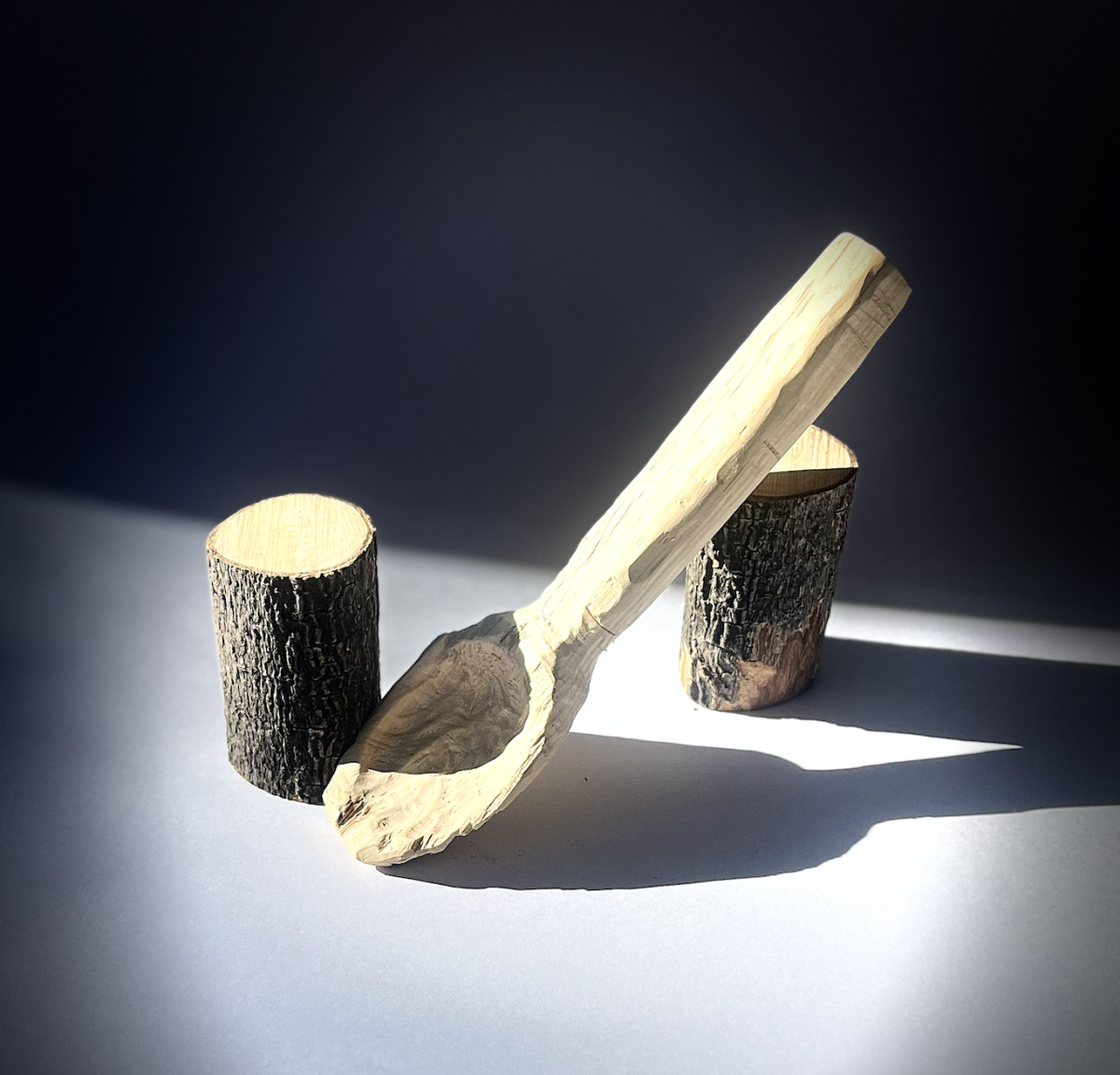
This year at EF brought a new elective class, Woodcraft, taught by Carl Jonhson. Johnson started the class for the 2025-2026 school year simply because he was asked to. As an enthusiast of carpentry, he gladly accepted the role.
To understand why you should be interested in the course you must first understand why the course is close to Johnson's heart. For him, woodcraft wasn’t just a skill. It was a cure for his boredom in his childhood.
He explained, "As a kid growing up in a very small rural community there was little to do. My friends and I would build wooden forts, bicycle ramps for jumping over objects—tree houses and various other projects made from wood. It was a material that was readily available."
The resourcefulness that Johnson described is a skill you can hone in his elective, and like him, you can make the best of any situation you are in with the skills you learn in the class.
The art of woodcraft in an era of machinery and technology showcases the beauty of simplicity, the hours it takes to craft, and the triumphant euphoria you feel after finishing a piece.
Johnson illustrates that, "The beauty in the process of making [is in the] process of slowing down and looking at something more carefully." The lure of taking your time and showing attention to detail in the fast paced society of today that overlooks small achievements is a serene process. It reminds you of your own creative abilities unique to human beings and helps shape how you perceive the world around you in a way that is uncommon these days. Curiosity fuels ambition, but finding curiosity in a world where information is accessible at your fingertips can be challenging; however, this is where woodworking can contribute.
For Johnson, the most rewarding part of teaching woodcraft isn't the fulfillment of finishing his own work or the art of instruction, but rather the prideful and ambitious faces of his students.
As he explained, "it’s the moments when they come to realize the beauty of something they made. They see for themselves the beauty and joy in the process of making. That is the most rewarding moment as an instructor." Having a teacher who finds fulfillment in your success is what helps students thrive in the class.
While the ambition of the teacher is important to consider when choosing a class, the experience of the students taking the course is too. As our first term comes to an end, we have insight into the perspectives of his disciples.
For Wilder Lebovich, a 12th grade student at EF academy, the class has been important in contributing to how he understands the world around him, and has been a refreshing reminder of what he can do in a world where he sometimes feels alienated from the nature around him. While Lebovich took the class as a placeholder in his schedule, he found that, "in Woodworking class, [he] learned some things that may actually help [him] in my future. If something is broken, [he] may be able to fix it because the class has supplied [him] with information and skills to do so." A sense of belonging is crucial to your development as a young adult. Woodworking helps fulfill a need for connection to one’s community and nature in our digital world.
Johnson, always looking to improve, still plans to change some things for the next school year despite rave reviews.
Johnson gives us a sneak peek on his new structure as he described that he would like to "restructure the class next time–primarily to allow more time for skill building and scaffolding projects to ensure students have the technical skills to succeed."
To focus on skill building, you also focus on the base structure of design in order to understand why techniques work the way they do. This grants knowledge that exceeds further than usual introductory courses offered by other institutions.
The new elective of woodcrafting grants students the ability to explore creative spaces in a way that's beneficial for their adult life. It allows Johnson to share his years of expertise on a forgotten craft that still has value. In a world where AI can replicate many arts and take a plethora of jobs, AI cannot sculpt wood with precision. Woodworking is uniquely human.